
6 Questions to Ask Your Nail Salon Before You Book
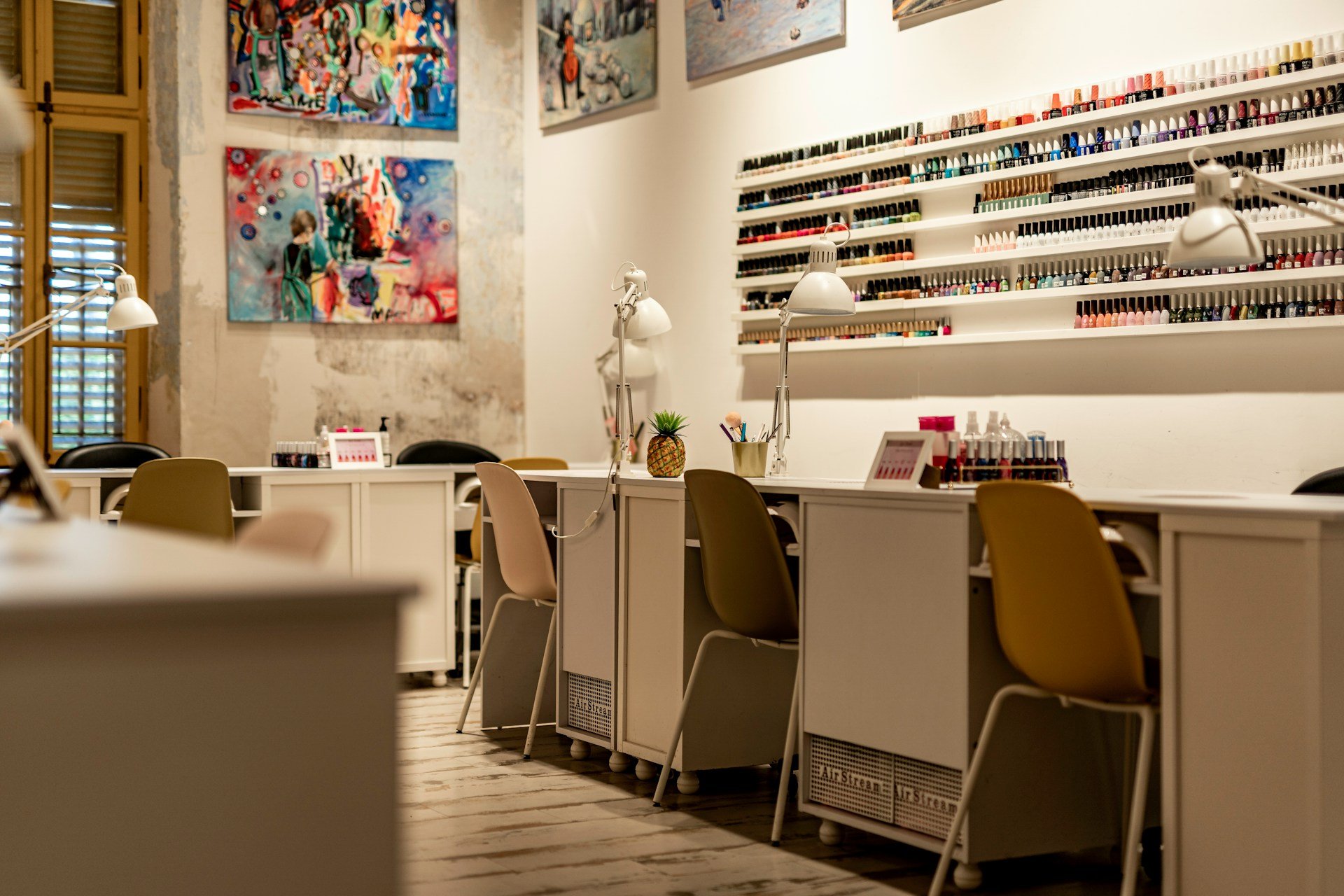
Typical nail salon
1. Take Sniff of Your Salon
A strong chemical odor — the kind that makes your eyes water or your throat tighten — is not normal, and it's not something to brush off. It's a sign that the salon is using products containing harmful compounds like formaldehyde, a known carcinogen found in some nail polishes and treatments. High-quality, non-toxic salons use products specifically formulated without these chemicals, and you'll notice the difference the moment you walk in. The air should feel breathable.
If the smell hits you at the door, that's your answer.
2. Ask About Tool Sterilization — Then Verify It
One of the most important questions you can ask any nail salon is: "Do you sterilize your tools with an autoclave?"
An autoclave is a high-pressure sterilization chamber — it looks like a mid-sized safe — that uses heated, pressurized distilled water to eliminate bacteria, fungi, and viruses from metal tools. It's the same standard used in medical and dental offices. Without it, tools can carry pathogens from one client to the next, no matter how clean the salon looks.
Here's the catch: many salons package their tools in sterilization pouches — small plastic bags that look official — but never actually run them through an autoclave. These bags have a small indicator tab in the corner that turns dark grey when properly sterilized. If the tab is still light or hasn't changed color, those tools were never sterilized.
Ask to see the tab before your service begins. A salon that's doing things right won't hesitate.
3. Understand What "Cheap" Really Means
It's tempting to choose the most affordable option. But in the nail industry, a $15 manicure is almost never what it seems.
Extremely low prices are typically a sign of one or more of the following: workers being paid below fair wages, hygiene steps being skipped to turn over clients faster, and low-cost products that may contain harmful chemicals. The nail salon industry has a well-documented labor problem — wage theft and exploitative working conditions are widespread, particularly in large volume salons competing on price.
When you pay a fair price at an ethical salon, you're not just paying for better polish. You're paying for properly compensated staff, quality non-toxic products, time taken between clients to actually clean, and someone who treats your appointment as more than a transaction.
Think of it this way: if the price seems too good to be true, something else is paying for the difference.
4. Know the Risks of Certain Services
Not all nail services are created equal, and some of the most popular ones come with real risks that salons often don't disclose.
Acrylics and dip powder are among the most common culprits for nail damage — not necessarily because of the products themselves, but because of improper removal. When nails aren't soaked off correctly, or when technicians use aggressive filing techniques, the result is thinned, brittle, or peeling nails that can take months to recover. At liliandcata, we see new clients regularly who come in with nails damaged by a previous salon that never explained proper removal or the importance of aftercare.
Before committing to any enhancement service, ask your technician: How do you remove this? What should I do between appointments to protect my nails? Their answer — or their willingness to engage with the question — will tell you a lot about how much they care about your long-term nail health, not just today's appointment.
5. Ask If They Offer Waterless Manicures and Pedicures
This one surprises most people: soaking your feet or hands in water before a service is actually not better for you. It softens the skin unevenly, makes cuticle work less precise, and — most importantly — creates a pathway for waterborne infections like fungal nail infections.
Waterless (also called dry) manicures and pedicures eliminate this risk entirely. They use hot towels and lotions instead of water, and they result in more precise work and longer-lasting polish. At liliandcata, waterless pedicures are the only kind we offer. It's a non-negotiable for us.
Very few salons offer this service, which is why researching a salon's website before booking matters. Look for mentions of dry or waterless techniques. If their website doesn't address products, methods, or values at all, that absence is itself information.
6. Pay Attention to How the Space Makes You Feel
A great nail appointment isn't just a transaction — it's time you carved out for yourself. The environment should reflect that.
Beyond cleanliness and safety, ask yourself: does this place feel calm? Is the music at a reasonable volume? Do the staff seem attentive and unhurried?
The best salons treat your wellbeing as the point of the visit — not a side effect of it. You should feel like your health and comfort are being taken into account from the moment you walk in. That feeling, when a salon gets it right, starts before you even sit down.
liliandcata is a non-toxic nail salon with locations in Greenpoint and Williamsburg, Brooklyn. We use only non-toxic products, sterilize all tools with an autoclave, and offer exclusively waterless manicures and pedicures.